



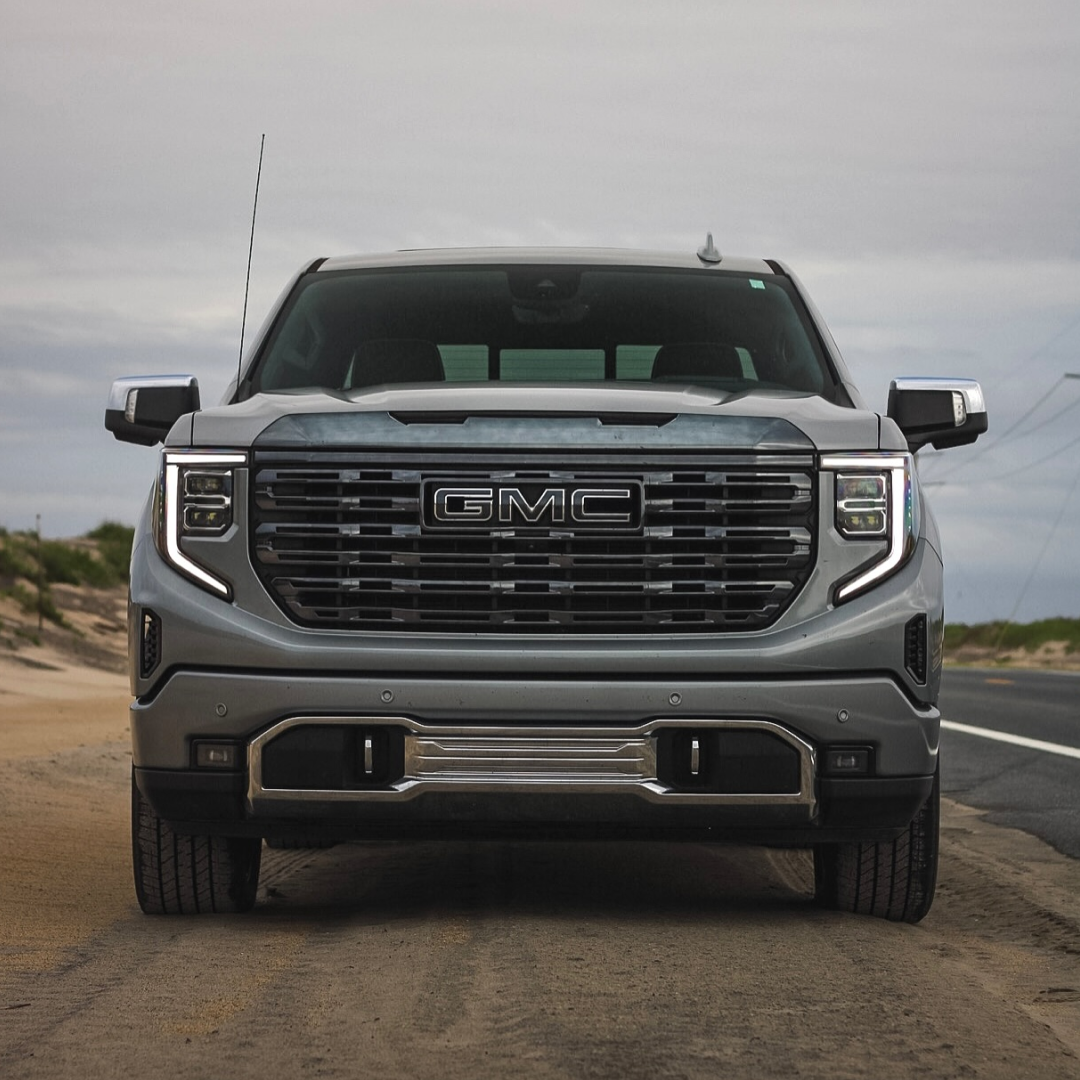
When tasks demand more muscle than a standard light-duty truck can provide, stepping up to the GMC heavy-duty lineup is the natural progression. For drivers across the Crossroads and South Texas regions—from Cuero and Port Lavaca down to Corpus Christi, San Antonio, and Bay City—selecting the right tool for the job is essential. The new GMC Trucks family offers two distinct heavy-duty powerhouses built to handle substantial payloads and heavy trailering requirements: the New GMC Sierra HD 2500 and the New GMC Sierra HD 3500.
While these trucks share a rugged design language, premium cabin configurations, and identical powertrain availability, they are engineered to fulfill different operational demands. This informational guide breaks down the core differences in structural capability, trailering limits, and configurations to help you determine which of these New GMC Heavy Duty models aligns with your specific hauling needs.
Shared Foundations: Powertrains and Technology
Before exploring the structural variations that differentiate the 2500HD and 3500HD, it is important to note what remains consistent across both platforms. Choosing between these models does not mean sacrificing performance options or interior refinement, as both can be equipped with the exact same high-output engine combinations.
- Standard Gasoline Engine: A robust 6.6L V8 gas engine paired with an Allison® 10-speed automatic transmission, delivering 401 horsepower and 464 lb-ft of torque.
- Available Diesel Engine: The legendary 6.6L Duramax Turbo-Diesel V8 engine, also mated to the Allison® 10-speed automatic transmission, generating 470 horsepower and a commanding 975 lb-ft of torque.
- Premium Cab Options: Both trucks offer identical trim hierarchies—ranging from the purposeful Pro and SLE to the highly refined SLT, AT4, and ultra-premium Denali Ultimate packages.
- Advanced Trailering Tech: Drivers in Port Lavaca and Bay City will find the same available proactive trailering technologies on both models, including the transparent trailer view, adaptive cruise control with trailering, and up to 14 available camera views.
Key Differences: Suspension and Configuration Layouts
The primary divergence between the New GMC Sierra HD 2500 and 3500 sits directly beneath the truck bed. The mechanical distinction lies within the rear suspension architecture and wheel configurations, which ultimately dictates how much weight each truck can support.
Rear Suspension Mechanicals
The Sierra 2500HD utilizes a robust leaf-spring rear suspension designed to balance heavy payload handling with a smooth, composed ride quality when traveling unloaded through San Antonio traffic. The Sierra 3500HD features a reinforced, stiffer leaf-spring bundle designed to minimize rear-end sag under extreme tongue weights, prioritizing maximum stability under load.
Single Rear Wheel (SRW) vs. Dual Rear Wheel (DRW)
While the Sierra 2500HD is exclusively available in a single-rear-wheel configuration, the Sierra 3500HD gives buyers a choice. It can be configured as a Single Rear Wheel (SRW) model or as a Dual Rear Wheel (DRW) model—commonly referred to as a “dually.” Opting for the dual-rear-wheel setup expands the truck’s footprint, distributing massive trailer weights across four rear tires for maximum stability against crosswinds and highway sway when hauling down to Corpus Christi.
Performance Limits at a Glance
Because structural capability varies based on engine selection, cab style, and drivetrain (2WD vs. 4WD), comparing the maximum available ratings reveals the operational sweet spot for each model.
| Capability Metric | GMC Sierra HD 2500 | GMC Sierra HD 3500 (SRW) | GMC Sierra HD 3500 (DRW) |
| Max Conventional Towing | Up to 20,000 lbs | Up to 20,000 lbs | Up to 20,000 lbs |
| Max Gooseneck/5th-Wheel Towing | Up to 22,430 lbs | Up to 21,510 lbs | Up to 36,000 lbs |
| Max Payload Capacity | Up to 4,178 lbs | Up to 4,590 lbs | Up to 7,290 lbs |
| Rear Wheel Configuration | Single Rear Wheel Only | Single Rear Wheel Only | Dual Rear Wheel Only |
Note: Maximum capability ratings depend on specific vehicle configurations, cargo, and passenger weight. Always review the trailering information label on the inside of the driver’s door jamb for specific vehicle ratings.
Frequently Asked Questions
Can I drive a Sierra 3500HD as a daily vehicle?
Yes. Both the SRW and DRW configurations of the 3500HD are highly maneuverable and feature sophisticated independent front suspensions. However, drivers frequently traveling through urban areas or tight parking spaces in San Antonio often prefer the standard width of the 2500HD or 3500HD SRW over the wider body profile of a dual-rear-wheel truck.
Does the 3500HD ride rougher than the 2500HD?
When entirely empty, the Sierra 3500HD will typically exhibit a firmer ride quality than the 2500HD due to its high-capacity rear leaf springs. Once a trailer or payload is attached, the suspension compresses, delivering an exceptionally stable and smooth highway ride.
Which model is required for a large luxury fifth-wheel camper?
While a properly configured New GMC Sierra HD 2500 can comfortably tow many modern fifth-wheel trailers, large luxury campers with heavy pin weights or triple axles often require the extra payload and stabilization provided by a Sierra 3500HD dual-rear-wheel truck.
Discover the GMC Heavy Duty Lineup at Victory GMC
Selecting the ideal heavy-duty truck comes down to matching your heaviest routine payload or trailer weight to the correct chassis configuration. Whether your operations require the flexible capability of the Sierra 2500HD or the heavy-duty limits of the Sierra 3500HD dually, finding the right fit requires seeing these trucks side-by-side.
We invite drivers from Cuero, Port Lavaca, Corpus Christi, San Antonio, Bay City, and beyond to visit our showroom to explore our inventory of New GMC Trucks firsthand. Our knowledgeable team is here to answer your technical questions, walk you through trailering specifications, and help you experience the engineering of GMC heavy-duty capability in person. Contact us online or stop by today to take a closer look at the Sierra HD family.
Connect with us


- June 2026
- April 2026
- March 2026
- January 2026
- December 2025
- October 2025
- August 2025
- June 2025
- December 2024
- November 2024
- October 2024
- September 2024
- August 2024
- June 2024
- May 2024
- April 2024
- March 2024
- February 2024
- January 2024
- December 2023
- November 2023
- October 2023
- September 2023
- August 2023
- July 2023
- June 2023
- May 2023
- April 2023
- March 2023
- February 2023
- April 2021
- February 2021
- December 2020
- November 2020
- October 2020